HomeRinglock vs Cuplock: Which Scaffold System Fits Your Project
Ringlock vs Cuplock: Which Scaffold System Fits Your Project
Both systems use vertical standards and horizontal ledgers. The joint design changes erection speed, bracing needs, and regional familiarity.
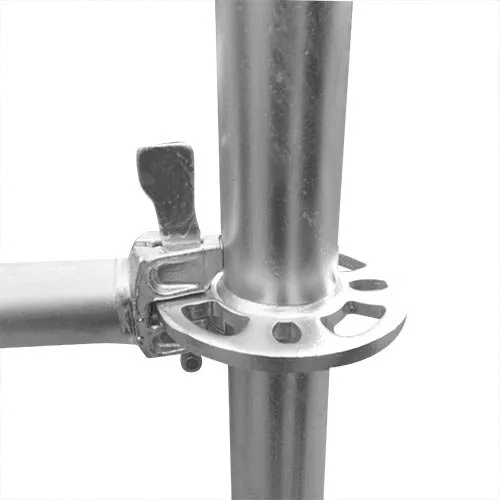
Difference Between Cuplock and Ringlock Systems
| Aspect | Cuplock | Ringlock |
|---|---|---|
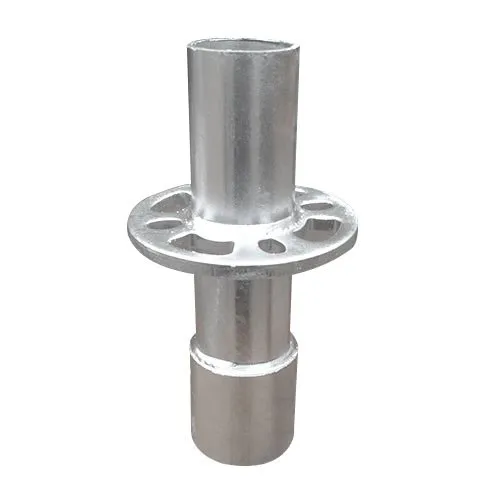
| Joint | Top and bottom cups welded to standard; ledger blade sits in bottom cup, top cup tightened by hammer | Rosette with 8 openings welded to standard; ledger end with wedge pin inserted and hammered tight |
| Connection angles | Ledgers connect at right angles only; limited angle flexibility | Ledgers and braces connect at multiple angles through rosette openings; supports curved and angled layouts |
| Erection | Requires hammer to secure top cup; slower for complex geometries | Wedge pin connection, hammer only; faster assembly and disassembly |
| Bracing | Typically requires separate diagonal braces for lateral stability | Rosette design allows integrated diagonal braces at various angles; often reduces need for additional bracing |
| Typical regions | Common in Middle East, Asia, and parts of Europe | Widely used in Europe, North America, Australia, and growing in other regions |
| Finish | Usually hot-dip galvanized or painted | Typically hot-dip galvanized; painted or powder coated optional |
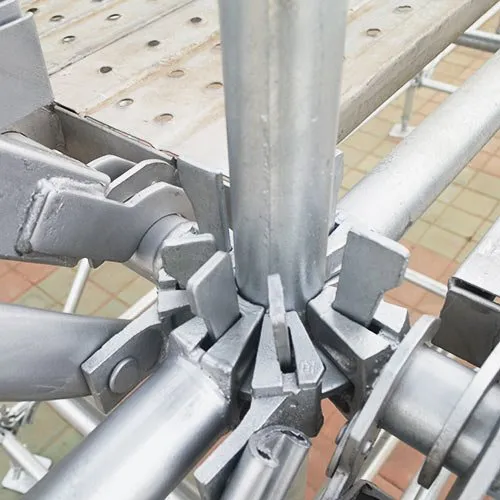
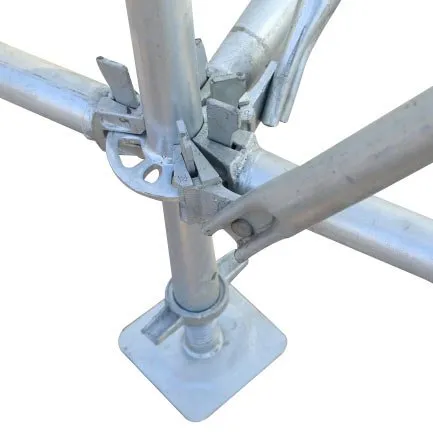
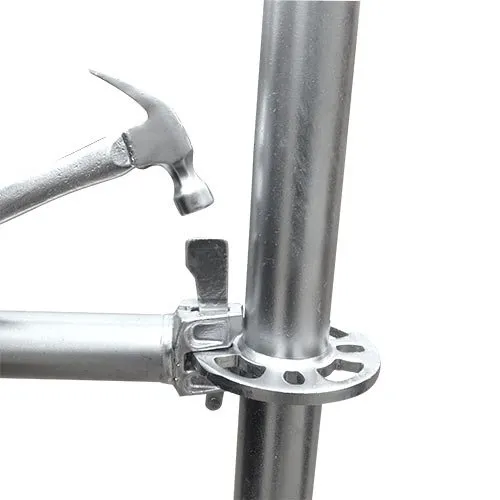
When to Choose Cuplock or Ringlock
Cuplock suits projects with simple rectangular layouts and where crews already know the system. Its top cup and bottom cup joint is proven on straight facades and slab shoring. The cup joint accepts ledgers at right angles, which covers many standard building shapes. If the site has no complex angles and cuplock is available locally, it remains a practical choice.
Ringlock handles complex geometry better. The rosette with 8 openings allows ledgers and diagonal braces to connect at multiple angles. This supports curved facades, circular tanks, and irregular structures without custom fabrication. Ringlock also speeds up erection because the wedge pin needs only a hammer. For projects with tight schedules or many angle changes, ringlock often reduces labor time.
Ringlock standards (verticals)
| Length | Rosettes | Tube | Steel | Finish |
|---|---|---|---|---|
| 0.5 m | 1 | Ø48.3 or Ø60.3 mm | Q355 | Hot-dip galvanized |
| 1.0 m | 2 | Ø48.3 or Ø60.3 mm | Q355 | Hot-dip galvanized |
| 1.5 m | 3 | Ø48.3 or Ø60.3 mm | Q355 | Hot-dip galvanized |
| 2.0 m | 4 | Ø48.3 or Ø60.3 mm | Q355 | Hot-dip galvanized |
| 2.5 m | 5 | Ø48.3 or Ø60.3 mm | Q355 | Hot-dip galvanized |
| 3.0 m | 6 | Ø48.3 or Ø60.3 mm | Q355 | Hot-dip galvanized |
Nominal dimensions. Wall thickness 2.75 / 3.0 / 3.2 mm, customizable. Unit weights and load data are issued with the quotation.
Send a technical inquiry
Grid, clear height and quantities are enough. We return dimension sheets and load data for your case.
- Made in our own plant, 100,000 m², founded 2016
- Hot-dip galvanized, painted or powder coated
- Reply within 24 hours